Common deck repairs
Canberra decks take hot, dry summers and frosty winters, and the timber moves with both. Most repairs we're asked about come down to a few things:
Split, cupped or soft boards
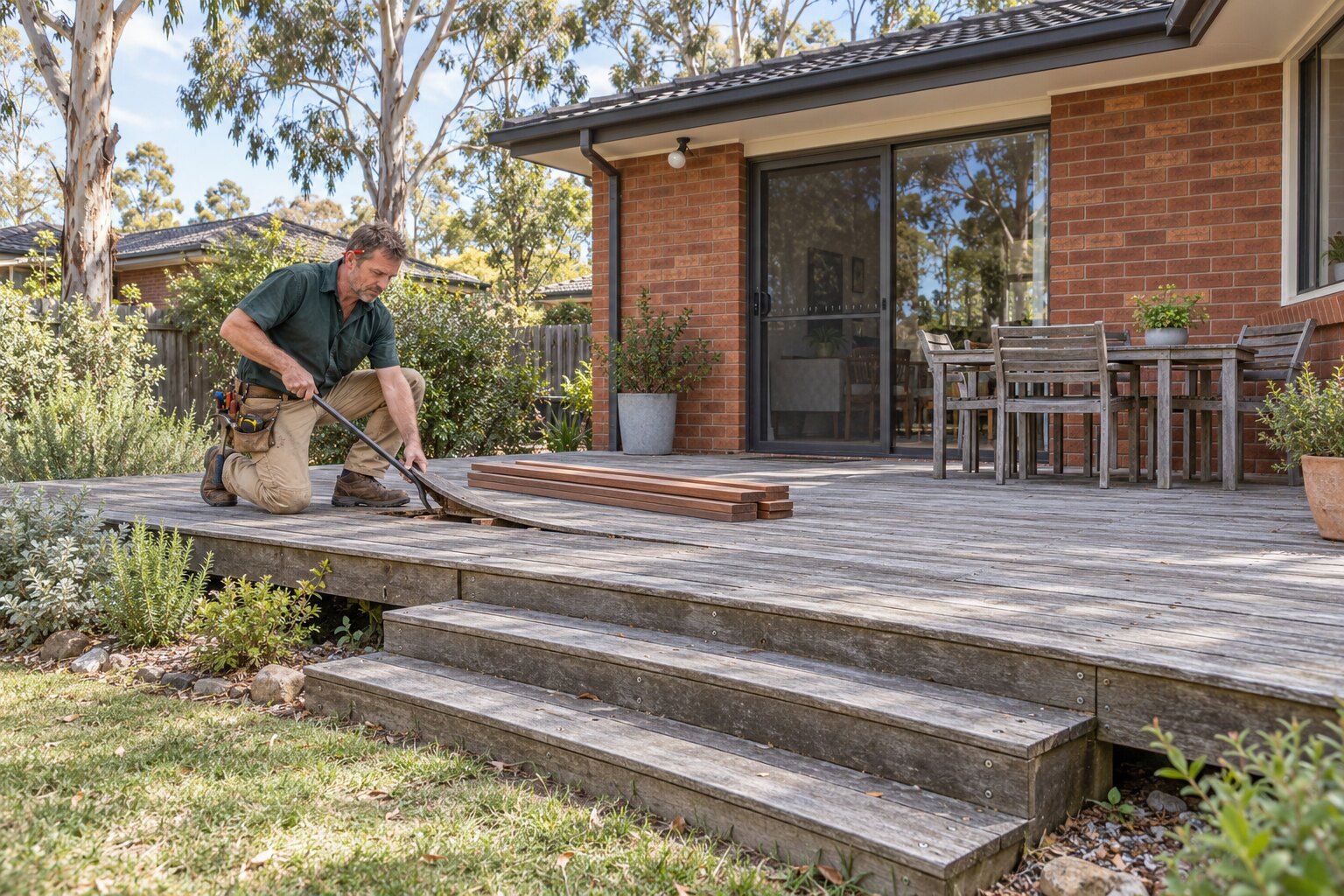
We lift the damaged boards, check the joists underneath, and fit new boards of the same width and thickness. Old merbau and hardwood can be matched closely once it's oiled; a few replacement boards will look newer for a season.
Nails lifting and loose boards
Frost and sun push nails up over the years. We punch or pull them and refix the boards with decking screws, so they stay down.
Wobbly steps and landings
Loose treads, split stringers and a bottom step that's sinking into the lawn. We replace the step timbers and re-set the base on a proper footing or pad.
Grey, weathered timber
Sun turns unoiled timber silver and dries out the surface. A sand and two coats of decking oil bring back the colour and slow the weathering.
Deck sanding and oiling
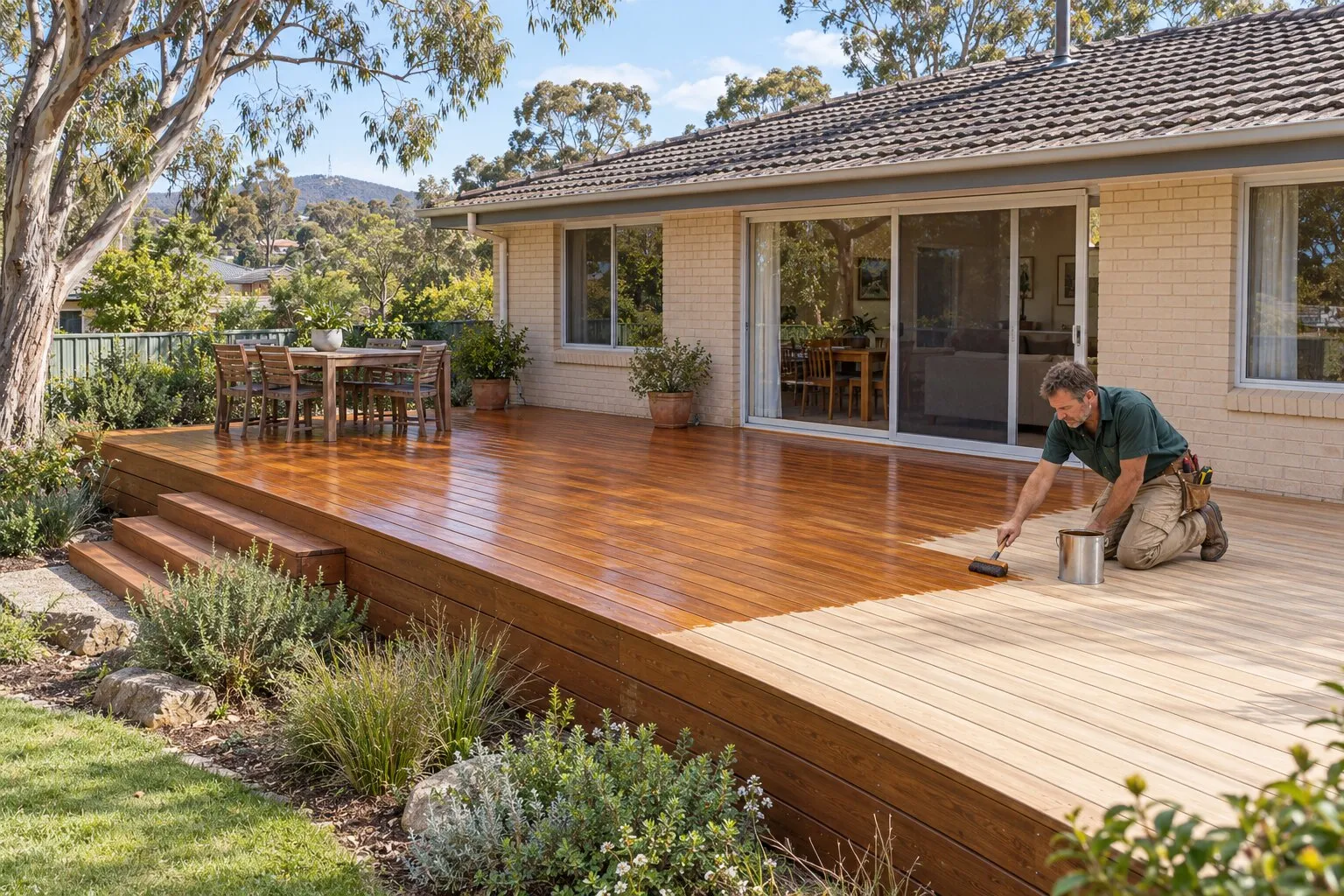
We clean the deck, punch or replace raised fixings, sand back the grey surface, then apply the oil you choose: a natural oil that soaks in, or a tinted one. The deck needs a few dry days, so we plan the job around Canberra's weather.
How often to re-oil depends on sun and traffic. A north-facing deck with no shade dries out faster than one under a pergola; when water stops beading on the boards, it's due.
Rotten bearers and joists under a deck
If the deck bounces, leans or sags, the problem is usually in the frame: rotten bearers or joists, posts that have moved, or footings that have sunk. We'll look underneath and tell you what we find.
Structural repairs need a licensed builder
Replacing load-bearing bearers, joists or posts is a structural repair under the ACT Building Act, so it needs a licensed ACT builder. Get a quote from a licensed builder for that part of the job.
Older decks and asbestos
WorkSafe ACT says any property built before 2003 must be assumed to have asbestos, and asbestos was used in some old fibre-cement sheeting under decks and around the base of houses. Tell us the house's age before we cut or pull anything off the wall. See our guide to asbestos checks before renovating.
What to send us
- Photos of the whole deck, the worst boards and the steps
- A photo underneath, if you can see in safely
- The deck's rough size and the timber, if you know it
- Whether you want it sanded and oiled as well
- The year the house was built
Questions about deck repairs in Canberra
Is it worth repairing an old deck or replacing it?
If the frame is sound, replacing the worn boards and refinishing usually makes more sense than starting again. If the bearers and joists are rotten, a rebuild is often the better value. We'll tell you what we find underneath.
Can you match my old decking boards?
We match the width, thickness and timber where it's still sold. New boards look brighter at first; oiling the whole deck evens it out.
When is the best time to oil a deck in Canberra?
Mild, dry weather suits oiling best: the timber needs to be dry, and oil shouldn't go on in frost or hot afternoon sun. Spring and autumn are popular for that reason.
Why do my deck nails keep popping up?
Timber shrinks and swells with the seasons, and nails slowly work loose. Refixing the boards with decking screws is the usual fix.
My deck is spongy underfoot. Is that dangerous?
It can be. A bounce or sag usually means a problem with the frame. Keep heavy loads off it, and have it checked; structural repairs to the frame need a licensed builder.
Where this information comes from
The rules and figures on this page come from these published pages, checked on 8 October 2026.
- WorkSafe ACT: identify and remove asbestos before residential renovations · WorkSafe ACT safety alert, 16 January 2025
- ACT Planning: unroofed decks, patios and terraces (building approval) · Territory Planning Authority, when a deck doesn't need a building approval