
Published · Updated
The short answer
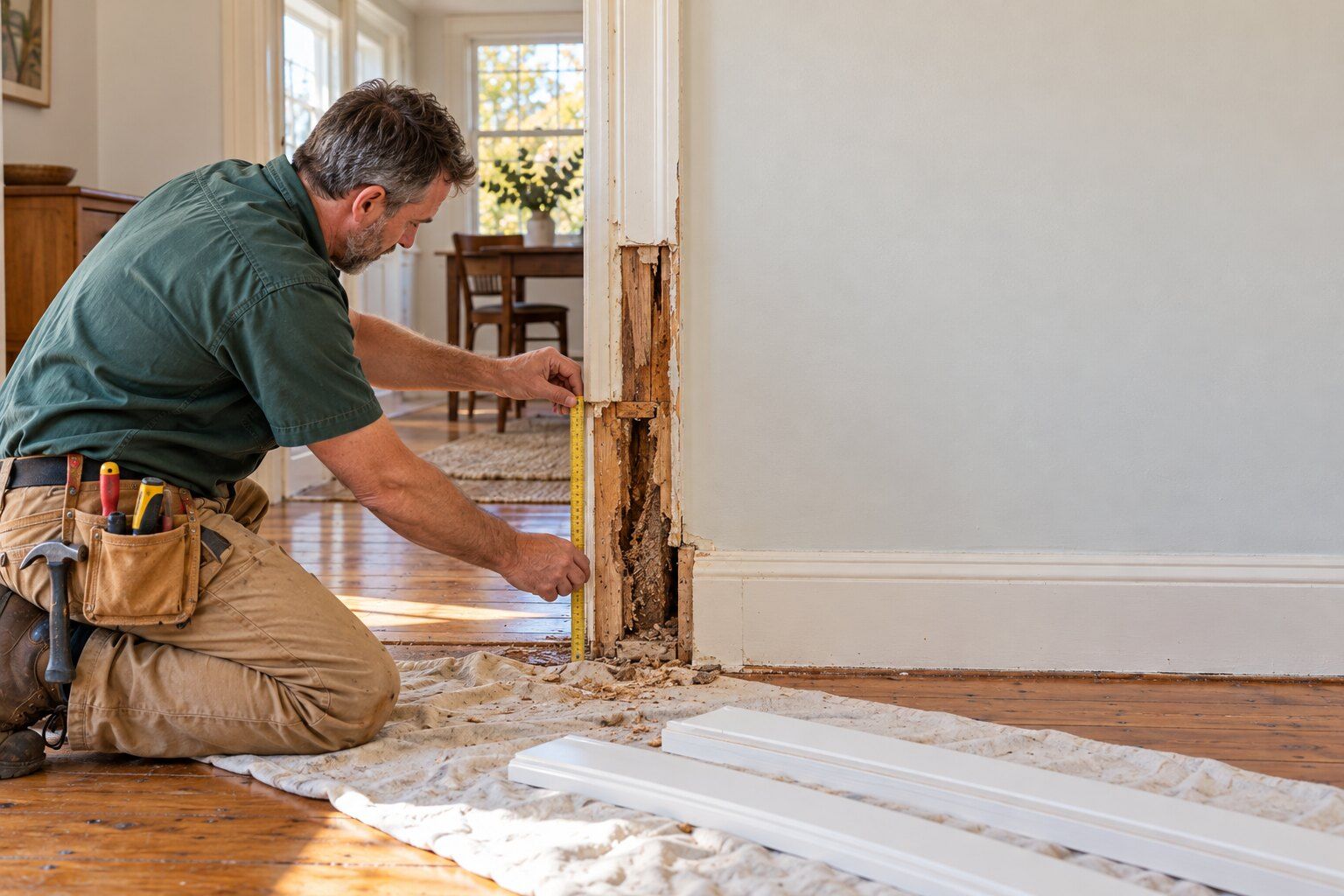
ACT City Services says the ACT region has about 30 kinds of termites, of which only a few damage sound timber, chiefly Coptotermes frenchi and Nasutitermes exitiosus. If you find damage, don't disturb the termites: get a timber pest inspection and any treatment done first. A carpenter can then replace damaged non-structural timber such as skirting, architraves, door jambs, window sills, weatherboards and decking. Damage to wall frames, floor framing or roof framing is a structural repair for a licensed ACT builder (checked 12 October 2026).
Termites in Canberra
Canberra's cold winters don't keep termites away. ACT City Services says the ACT region has about 30 kinds of termites, but "only a few cause extensive damage to sound timber". The two that do the most damage are Coptotermes frenchi and Nasutitermes exitiosus; C. acinaciformis can cause severe damage but is uncommon. It also notes Heterotermes ferox is sometimes found feeding on weathered paling fences, and Porotermes adamsoni nests in living eucalypts and damp wood.
Australia-wide, the National Construction Code requires termite management for new homes where subterranean termites are a risk, and its explanatory notes say termites are not considered a risk in Tasmania. In practice that means new houses outside Tasmania, Canberra included, are generally built with a termite management system, and the code requires a durable notice on the building advising that the system should be inspected and maintained.
Signs of termite damage
- Skirting, architraves or door jambs that sound hollow when tapped, or that a screwdriver pushes into easily
- Thin mud tubes (galleries) running up piers, slab edges, walls or fence posts
- Paint that bubbles or ripples over timber, or plaster that cracks along a timber line
- Doors and windows that suddenly bind as the frame distorts
- Fence palings, garden edging or deck timbers crumbling near the ground
Don't break into the workings
If you find live termites or fresh mud tubes, leave them alone and don't spray them. Disturbing them can make them move elsewhere in the house and makes treatment harder. Call a pest manager for a timber pest inspection.
The order of jobs: inspection, treatment, then repairs
Repairing timber while termites are still active just gives them new timber to eat, so carpentry comes last.
1. Timber pest inspection
A pest manager inspects the house, finds where the termites are and how far the damage goes, and recommends treatment. Queensland's building regulator, the QBCC, recommends inspections at least every 12 months, or more often in high-risk areas; follow your own inspector's advice.
2. Treatment
The pest manager treats the colony and, where needed, the soil or a barrier around the house. Ask how long to wait before damaged timber can be removed.
3. Assess the damage
Once the termites are dealt with, the damaged timber can be opened up. This is where it becomes clear whether the damage is in trims and linings or in the frame that carries the house.
4. Repairs
Non-structural timber is replaced by a carpenter; structural framing by a licensed builder. Keep the inspection report and treatment certificate with the house papers.
What a carpenter repairs
Termite damage to timber that doesn't carry the house is ordinary carpentry repair. That's the work we do:
- Skirting boards and architraves replaced and matched to the existing profile (see skirting and architraves)
- Door jambs and window sills cut out and replaced
- Weatherboards, fascias and trims replaced
- Damaged floorboards replaced where the joists below are sound (see floorboard repairs)
- Fence palings, rails and gate timbers, and deck boards and steps
Replacement timber in contact with the ground, such as fence posts, should be treated pine rated for in-ground use (H4) or a naturally durable, termite-resistant species.
When it's a job for a licensed builder
If the damage is in wall studs, top or bottom plates, bearers, joists, roof rafters or a beam over an opening, the repair is structural. In the ACT that's building work for a licensed builder, and may need a building approval. The same applies to restumping. We'll tell you if what we find when we open up a wall or floor turns out to be structural, and stop there.
Structural termite repairs need a licensed ACT builder
Replacing load-bearing wall, floor or roof framing damaged by termites is structural work under the ACT Building Act. Get a quote from a licensed ACT builder for that part of the job.
Buying or selling a house in the ACT
When a house is sold in the ACT, the seller must make a pest inspection report available if the home has been occupied (Civil Law (Sale of Residential Property) Act 2003, s 9). The regulation says that report must be done in accordance with AS 4349.3, the timber pest inspection standard, and can't be relied on for a contract entered into more than 180 days after the inspection. If you've bought a house and the report noted past termite damage, that's a good place to start when planning repairs.
Pre-2003 houses come with one more check: WorkSafe ACT says they must be assumed to contain asbestos, and some old linings around windows and eaves are fibre cement. Tell us the year the house was built before anything is cut; see the asbestos guide.
Questions about termite damage
Are there termites in Canberra?
Yes. ACT City Services says the ACT region has about 30 kinds, and a few, chiefly Coptotermes frenchi and Nasutitermes exitiosus, cause most of the damage to sound timber.
Can a carpenter fix termite damage?
A carpenter can replace damaged non-structural timber such as skirting, architraves, jambs, sills, weatherboards, floorboards and decking, after the termites have been treated. Damaged wall, floor or roof framing needs a licensed ACT builder.
Should I repair termite damage before or after treatment?
After. Repairing first gives active termites new timber. Get the inspection and treatment done, then open up and repair the damaged timber.
How often should I get a termite inspection?
Follow your inspector's advice. Queensland's building regulator recommends at least every 12 months, or more often in high-risk areas.
Do new Canberra homes have termite protection?
Where subterranean termites are a risk, which the National Construction Code treats as everywhere except Tasmania, new homes need a termite management system and a durable notice saying it should be inspected and maintained. It only works if it isn't bridged by garden beds, paving or new work.
Where these figures come from
The prices and rules on this page come from these published pages, checked on 12 October 2026.
- ACT City Services: termites · ACT Government page on termites in the ACT region, updated 29 September 2025
- NCC Housing Provisions, part 3.4: termite risk management · Australian Building Codes Board, NCC 2022 Housing Provisions
- QBCC: termite management systems for homeowners and builders · Queensland Building and Construction Commission publication, April 2024
- Civil Law (Sale of Residential Property) Act 2003 (ACT), s 9 · Required documents for a residential sale, including a pest inspection report (AustLII consolidation)
- Civil Law (Sale of Residential Property) Regulation 2004 (ACT) · ACT Legislation Register, republication effective 23 February 2026 (pest reports to AS 4349.3, s 10)
- NSW EPA: treated timber hazard classes chart · NSW Environment Protection Authority chart of treated timber hazard classes H1 to H6
- ACT Planning: builder licence · Territory Planning Authority, ACT builder licence classes
- WorkSafe ACT: identify and remove asbestos before residential renovations · WorkSafe ACT safety alert, 16 January 2025